Industries That Rely on Wetlands Access (And Why Standard Equipment Fails)
Wetlands are some of the most challenging environments to work in. Soft soil, standing water, unstable ground, and environmental regulations make traditional access nearly impossible.
Yet critical industries operate in these areas every day. Thats where Wetlands Transportation Services come in! As a wetlands transporation provider in the Southeast Texas and Louisiana for over a decade, we have the experience, means, and knowledge to get your project whereever it needs to go in even the most difficult terrain.
From pipeline construction to hurricane recovery, specialized wetlands transportation services are not a luxury — they are a necessity.
Here’s who depends on them.
1. Oil & Gas and Pipeline Construction
Pipeline corridors frequently cross marsh, swamp, and coastal lowlands throughout Texas and Louisiana.
Standard pickup trucks, excavators, and wheeled equipment sink or rut immediately in saturated soil. Beyond mechanical failure, excessive ground pressure can damage sensitive terrain and create regulatory issues.
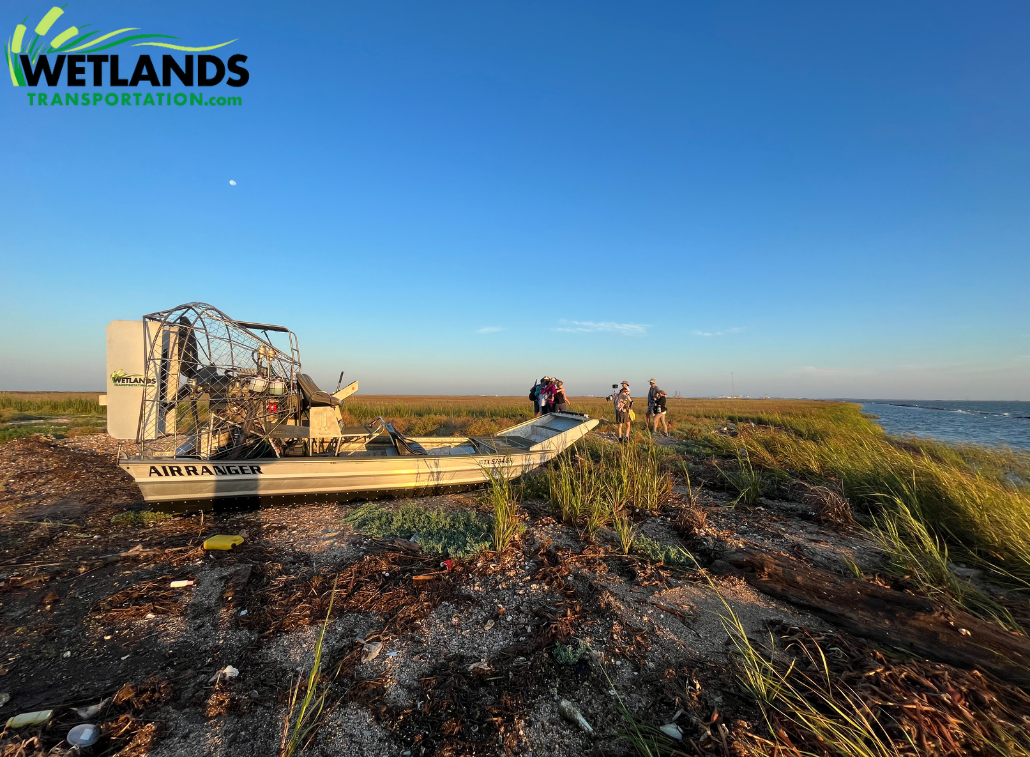
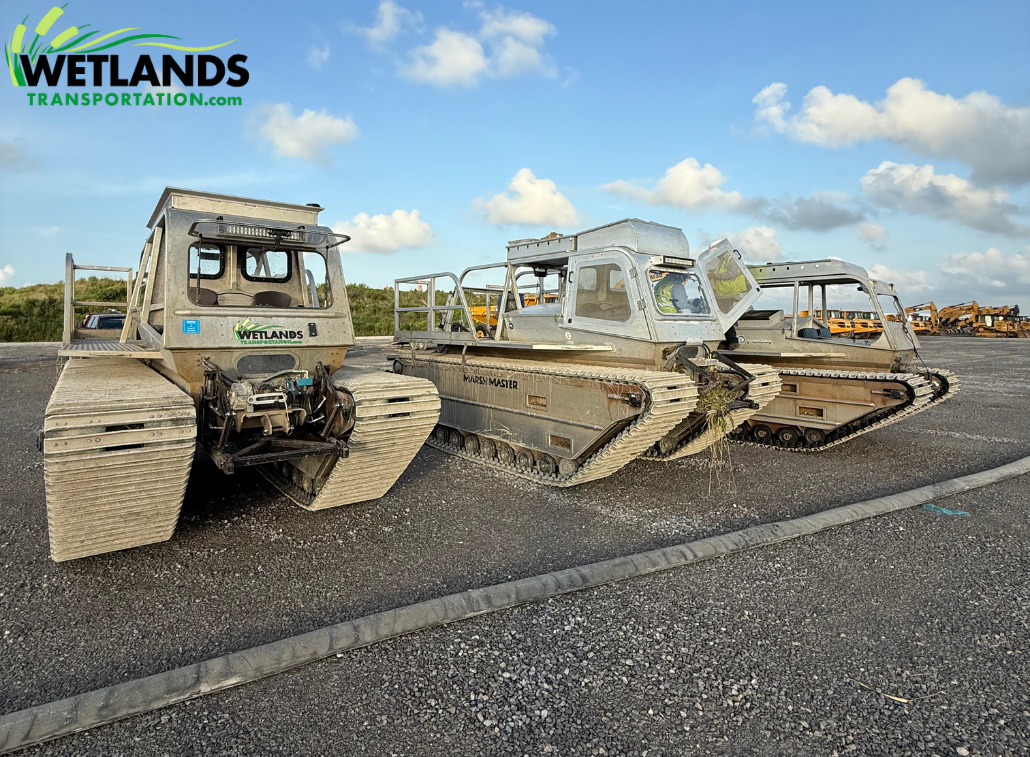
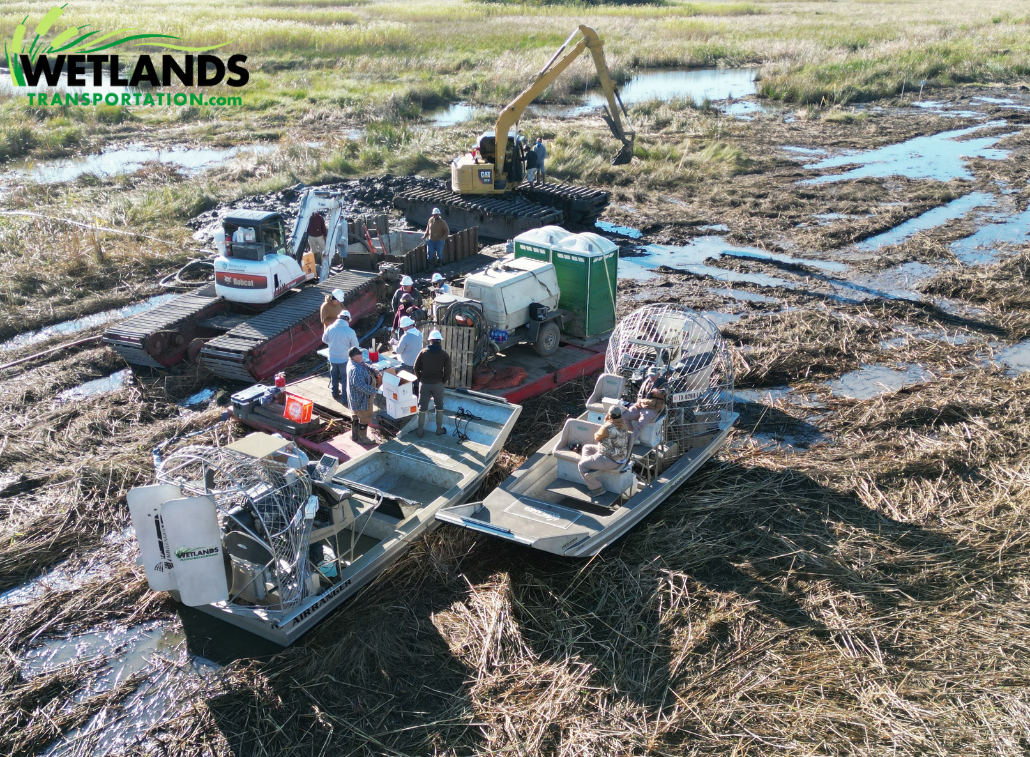
Specialized equipment like marsh buggies and airboats provide low ground pressure access, allowing crews to move personnel, tools, and materials safely across unstable terrain without causing environmental damage.
Without proper wetlands transportation, projects stall before they even begin.
2. Utility and Power Line Maintenance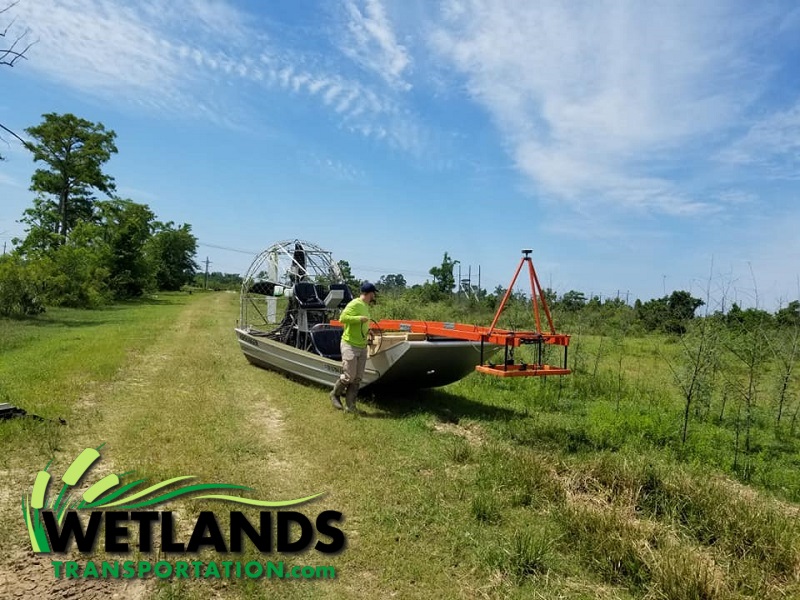
Electric transmission lines and right-of-way corridors often extend through wetlands and flood-prone areas.
After storms or hurricanes, access becomes even more difficult. Vehicles get stuck. Roads wash out. Temporary access mats aren’t always enough.
Specialized wetlands transportation allows utility crews to:
• Inspect downed lines
• Access remote poles
• Transport repair equipment
• Restore service faster
In emergency response scenarios, speed matters. Standard equipment simply cannot deliver reliable access in marsh conditions.
3. Environmental and Restoration Projects
Environmental consulting firms and restoration contractors frequently work in protected wetlands.
In these cases, minimizing ecological impact is critical. Excessive rutting, soil compaction, and vegetation damage can lead to fines or project shutdowns under agencies like the U.S. Army Corps of Engineers.
Low ground pressure equipment spreads weight across wide tracks, significantly reducing disturbance. This allows scientists, surveyors, and restoration crews to operate while maintaining compliance.
Standard equipment fails not just mechanically — it fails environmentally.
4. Disaster Response and Hurricane Recovery
Along the Gulf Coast, storms regularly flood low-lying areas.
After events like Hurricane Harvey and Hurricane Laura, entire regions became accessible only by specialized equipment.
Wetlands transportation services assist with:
• Infrastructure inspection
• Debris removal
• Utility restoration
• Emergency logistics
When roads disappear, access becomes the mission.
5. Surveying and Geotechnical Services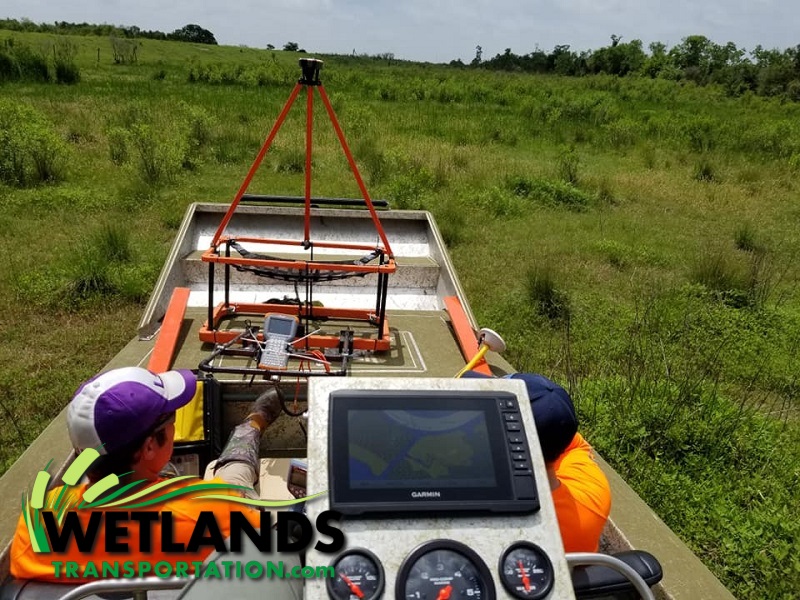
Before construction begins, land must be surveyed and soil tested.
Survey teams frequently need to reach remote marsh locations with sensitive instruments. Traditional vehicles introduce vibration, instability, and often cannot reach the site at all.
Specialized marsh access ensures crews can perform accurate measurements without terrain interference or delays.
Why Standard Equipment Fails in Wetlands
It comes down to physics.
Ground pressure is the force exerted by equipment over the surface area contacting the soil. Wheeled vehicles concentrate weight over small contact patches. In saturated environments, that pressure exceeds the soil’s bearing capacity — and the vehicle sinks.
Tracked marsh equipment distributes weight across a much larger footprint, dramatically reducing pounds per square inch on the surface.
Less sinking.
Less rutting.
Less downtime.
In wetlands, the wrong equipment doesn’t just slow you down — it stops you completely.
Wetlands Transportation Is Infrastructure Support
For industries operating across Southeast Texas and Southwest Louisiana, specialized access is part of project planning, not an afterthought.
Choosing the right wetlands transportation partner ensures:
• Reduced project delays
• Environmental compliance
• Faster mobilization
• Lower overall risk
When terrain becomes the obstacle, access becomes the solution — and we are here to be your solution.
For your Wetlands Transportation needs – you can contact us anytime!
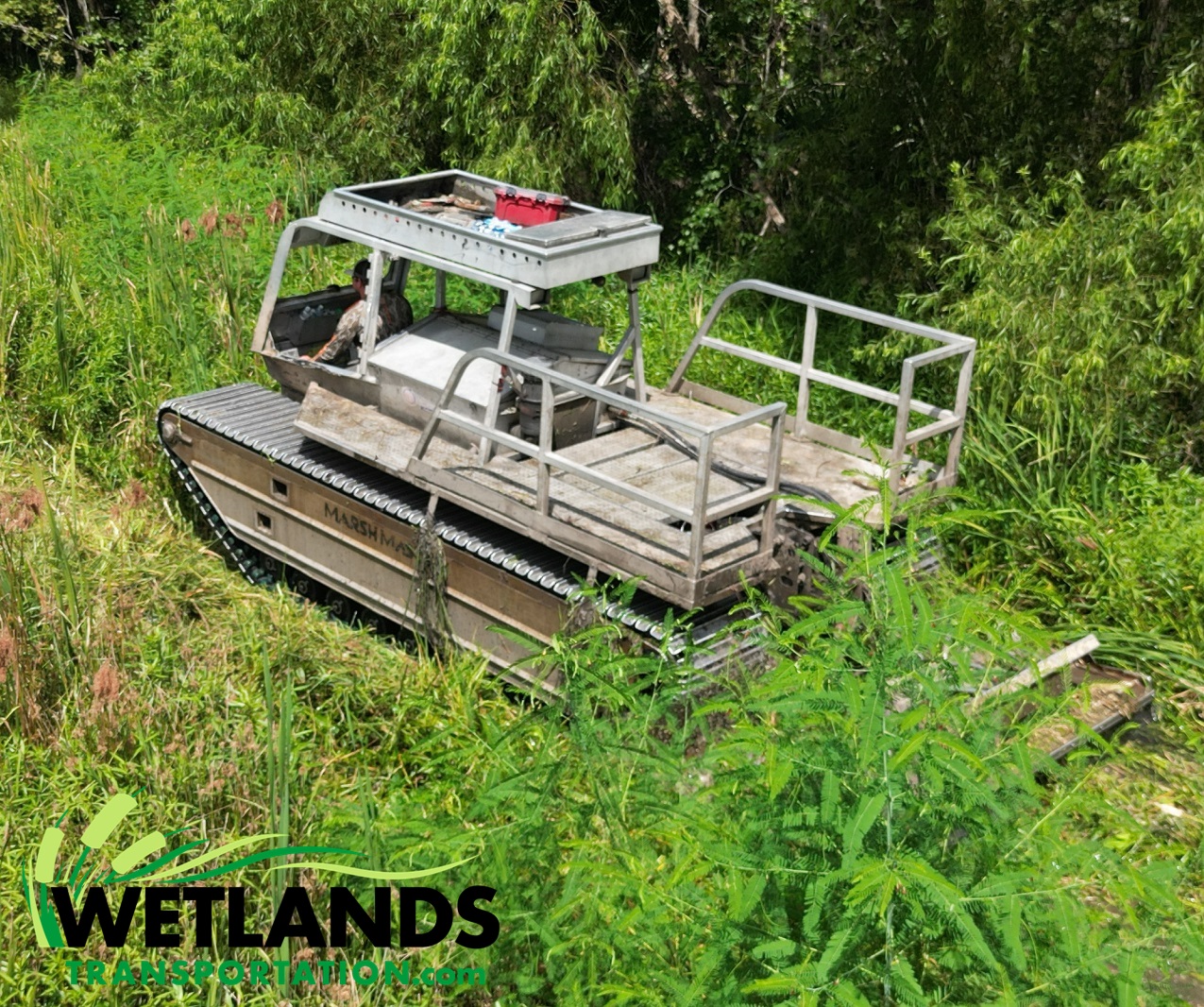
 What Is a Marsh Buggy?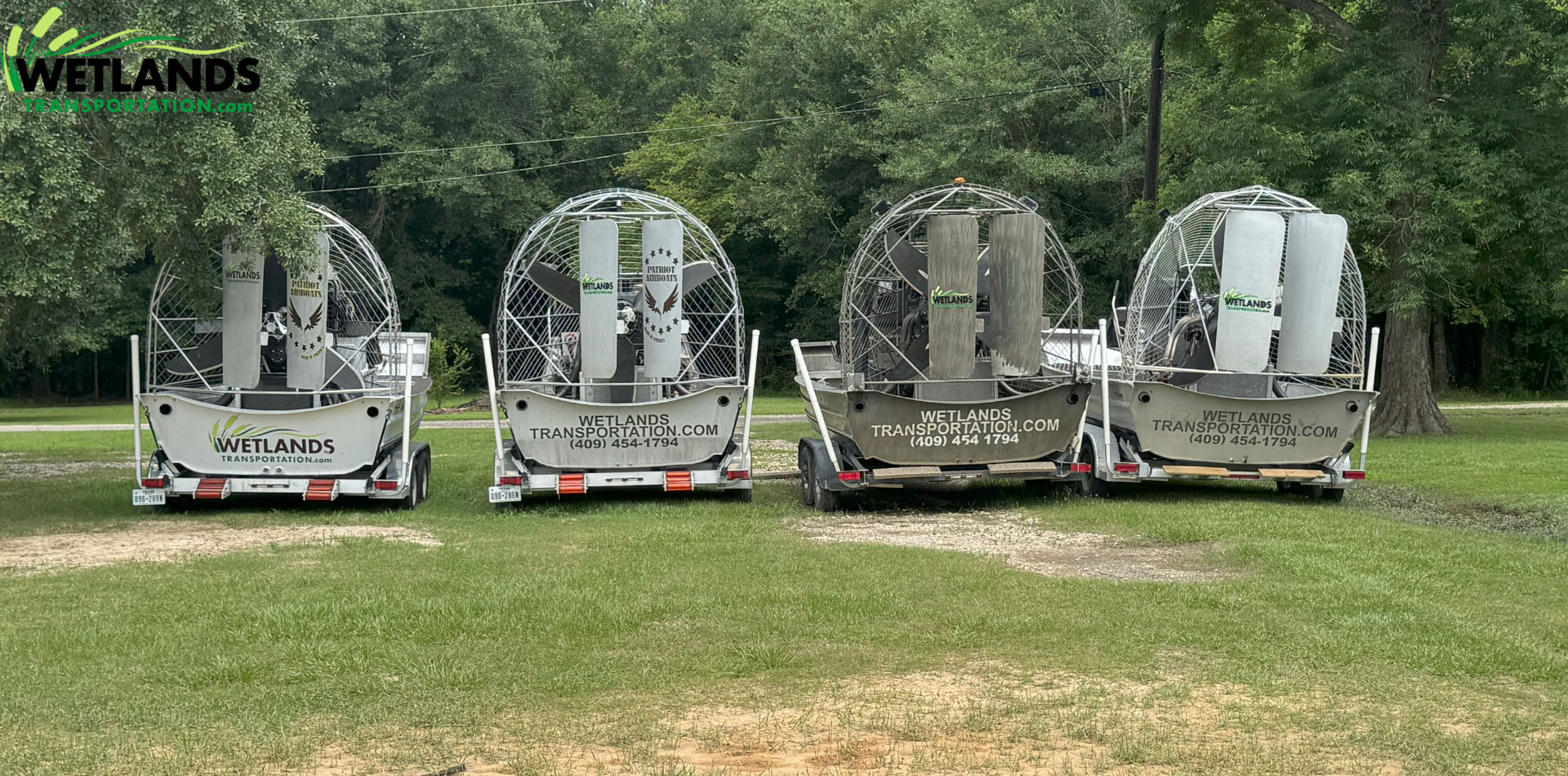
 Air Ranger Boats vs. Amphibious Marsh Buggies